
Liu Anqi: the hydrogen industry is an important driver of new quality productive forces
This archived announcement has been translated automatically from Chinese. Names and technical wording may require editorial verification. Original artwork is preserved where applicable.
The fourteenth four meetings of the Beijing City Council were opened on 24 January. Ange Liu, Member of the Beijing Municipal Council from the other sectors of the economy and Minister of Strategic Planning of the Beijing Company for Limited Liability in Mechanical and Electrical Holdings, Beijing, presented the “Proposal for the High-Quality Development of the Beijing City Hydrogen Station”.
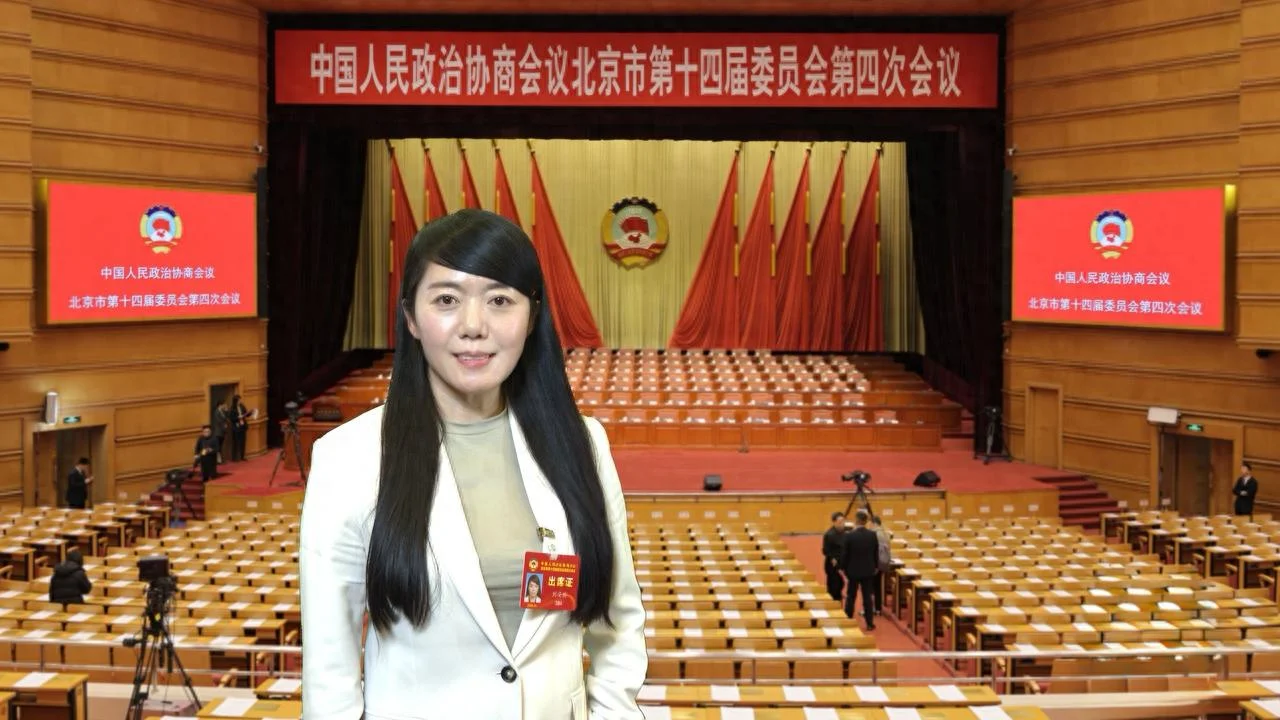
Member of the Beijing Municipal Council, and Minister of Strategic Planning, Beijing Company for Limited Liability for Mechanical and Electrical Holdings, Beijing. Interviewee's supply chart
In an interview with The Beijing News' Beike Finance, Liu Anqi said hydrogen, as a clean and efficient secondary energy source and an important energy carrier, would be a key part of China's future energy system. Accelerating infrastructure is a clear national strategic direction. Developing the industry is important to Beijing's implementation of China's carbon goals, its pursuit of advanced energy technologies and its modern industrial system. As a strategic emerging and future industry, hydrogen is both a driver of new quality productive forces and an essential contributor to Beijing's goal of growing its advanced green energy and low-carbon environmental industries beyond RMB 1 trillion by 2030.
“There have been positive developments in the hydrogen energy industry in Beijing in recent years, such as the promotion of fuel cell cars and the construction of hydrogen-added stations. However, enterprises generally note that the problems of “slow construction, difficult site selection and high cost” of hydrogen-added stations remain prominent, constraining the further promotion and operational efficiency of vehicles. "Ange Lau called it.
She mentioned that the high-quality development of hydrogen-filling stations was not only an attempt to increase numbers, but also to optimize network layout, increase operational efficiency, sustainability of business models and synergy of industrial ecology. The core is a leap from “have” to “beautiful”, from “point demonstrations” to “networking, market-based operations”.
In particular, with regard to the promotion of high-quality development at the Beijing City Hydrogen Plants, Liu Ange proposed to incorporate into the city's territorial spatial planning, integrated transport planning and energy development planning the deep planning depth of the Hydrogen Plants; to define the attributes of the “energy infrastructure” of the Helium Plants, with clearer policy support and more efficient processes for land supply, administrative approval; and to build a diversified support system to foster a sustainable business model.
Liu Anqi described Beijing's goal of exceeding RMB 1 trillion in advanced green energy and low-carbon environmental industries by 2030 as encouraging. Her proposal for high-quality hydrogen station development directly supports that goal. A mature refueling network can unlock a substantial market: beyond infrastructure investment itself, it stimulates upstream production equipment and green hydrogen, midstream fuel cell development and manufacturing, and downstream vehicles and transport operations. It can create new business and service models and provide a foundation for a trillion-yuan industrial cluster.
“In the light of the demonstration leadership, successful Beijing experiences in hydrogen plant planning, safe operation, smart management, business models, etc., can provide replicable `Beijing experiences' and `capital standards' for the development of hydrogen energy infrastructure in large cities across the country. This is not only the development of their own industries, but also the implementation of a synergistic development strategy in Kyoto, contributing to the development of world-class green low-carbon industry clusters. "Ange Liu says.
Reproduced from: The New Kyoto newspaper
English edition of the original Chinese page. Historical statements, dates and figures are retained as published.