
Engineering Research Center discusses hydrogen development in the Yangtze River Delta
This archived announcement has been translated automatically from Chinese. Names and technical wording may require editorial verification. Original artwork is preserved where applicable.
On November 7, Nantong, Jiangsu, issued its Guidance on the Development of the Hydrogen Energy and Fuel Cell Vehicle Industry (2022–2025). The document set a target of further expanding the city's industry by 2025, with total output across the hydrogen-related value chain exceeding RMB 20 billion. It aimed to make Nantong an important Yangtze River Delta cluster for fuel cells and key components, and a center for green hydrogen production and hydrogen equipment.
On 5 December, the Zhejiang Provincial Development Reform Commission issued a request for advice on the implementation of institutional mechanisms and policy measures for a green and low-carbon energy transformation in Zhejiang Province (open draft). In the case of hydrogen, it is noted that the combination of nuclear energy for heating and hydrogen for nuclear energy is encouraged, and the construction of zero carbon future cities (campus) at nuclear power bases is promoted. Encourage active and new coal-coupled renewable energy, storage and hydrogen integrated energy service providers to explore how the same market agents operate in a complementary and multi-power integrated regional energy system and demonstrate intelligent integrated energy services.
On 7 December, Anhui Province launched the " Carbon summit implementation programme for Anhui Province ", which again noted the promotion of the whole chain of hydrogen “storage” in Anhui Province and the development of renewable energy production models in areas where photovoltaic and wind power are better developed.
On 8 December, the Shanghai Municipal Commission on Economics and Informatization, the Shanghai Municipal Council for Development and Reform, the Shanghai City Council for Science and Technology and the Shanghai City Eco-Environmental Department issued a joint programme for the implementation of carbon peaks in Shanghai City industry. There is a clear proposal to accelerate the substitution of conventional fossil energy from renewable and new sources and to deepen the production of hydrogen; to vigorously promote the application of hydrogen energy and to develop clean, efficient and economical industrial by-product hydrogen-purification technologies that break through key technologies such as energy-efficient hydrogen fuel cell systems, long-lived power reactors and proton swaps.
According to incomplete statistics, a special hydrogen energy development policy has been introduced in one municipality in the three provinces of the Long Triangle, and plans have been put in place in the Fourth District of the eight municipalities.
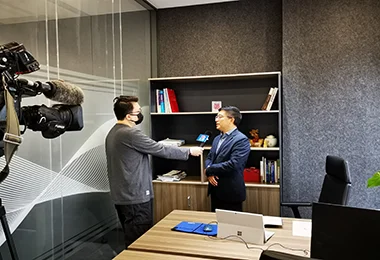
Gao Dingyun, Director of the Shanghai Research Centre on Hydrogen Energy Use, appears to be one of the most developed regions of our economy, but also one of the most energy-consuming regions in our country. Conversely, emissions are also the most, and low carbon is a key factor for high-quality economic development in the future. The long-triangular region, particularly Shanghai, is now at the top of the country in the field of hydrogen energy technology, and this is followed by the further expansion and refinement of the hydrogen energy application landscape, such as the construction of long-triangulation hydrogen energy highways, or the establishment of long-trigonal inland river navigation, a green ship transport network for coastal shipping, etc.
As the hydrogen energy industry deepens, how industry can be better positioned, and an orderly pattern of competition in the form of “diplomatic development” becomes a mandatory answer for the Long Triangle provinces and municipalities.
According to local plans, Shanghai City is forming a “North-South, East-West and Three Highlands” hydrogen energy industry space layout, with a focus on the construction of two hydrogen gas preparation and supply support bases and three industrial high-rises at Lingang, Ka Ding and Aingura. Zhejiang produces hydrogen using renewable sources of energy such as wind and photovoltaic power at sea and carries out related pilot work in coastal areas such as canoe and constantly improving hydrogen energy security capabilities.
Gao Dingyun believes that there are a variety of hydrogen-producing resources in Shanghai's Bo and Jinshan, in Zhejiang Kahing, Ningbo and Jiang Shu Jiadu, and even in Cloud Harbour, and that there are various hydrogen energy projects that can be integrated in the future, while designing a whole set of development directions for hydrogen energy geared to long triangles, avoiding homogenization, and making capital use and resource use more efficient for the healthy development of the hydrogen energy sector throughout the long triangle.
English edition of the original Chinese page. Historical statements, dates and figures are retained as published.